


The students won. Will the system change?
Serbia's experience and the questions it raises for Georgia
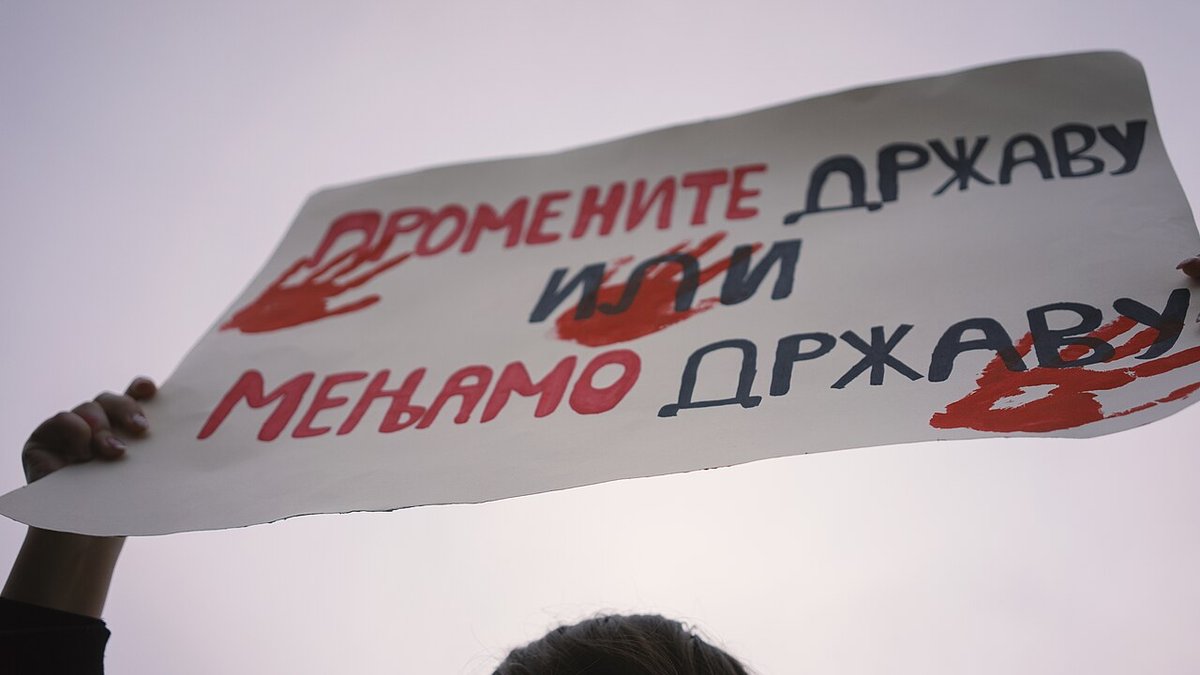
In Serbia, a student-backed electoral list has achieved what the traditional opposition failed to do for years: after the parliamentary election on 25 October, Aleksandar Vučić conceded defeat. According to preliminary figures, the "Student List" will win a parliamentary majority — 135 to 140 seats, by Vučić's own estimate. The final distribution of seats is still to be confirmed, but the main political result is already clear: a protest that began in the universities has turned into a successful electoral challenge.
For Georgia, where distrust of political parties is a significant part of public life, this experience deserves attention. Yet Serbia's story cannot be explained by the students' courage or by a rejection of politicians alone. The central question is how trust was turned into representation — and how accountable that new representation will be.
From tragedy to political demands
The movement was triggered by the collapse of the canopy at Novi Sad railway station on 1 November 2024. The death toll later rose to sixteen. Protesters linked the tragedy to alleged corruption and institutional negligence; the authorities denied the corruption allegations. Demanding political responsibility should be kept distinct from establishing any individual's criminal guilt.
The students' initial demands were specific: publication of the full construction documentation, accountability for those who attacked demonstrators, the dropping of cases against detained protesters, and a 20 per cent increase in higher-education funding. The government said it had met them; the students disagreed. They did not regard the resignation of Prime Minister Miloš Vučević as meeting their demands either.
The distinction matters: an official stepping down is not the same as an institution taking responsibility.
Who are "the students"?
The movement relied on faculty general assemblies, known as plenums. Participants debated and voted on issues; working groups and coordination between universities kept the work going. Having no single leader did not mean having no organisation or no influential individuals.
In May 2025 the movement called for early elections. The "Student List" created later brought together people from a range of professions, chosen by the students. It is therefore more accurate to speak of student-backed candidates than of a future government staffed by students.
Keeping its distance from party leaders did not strip the movement of political content: it selected candidates, published a programme and competed for power in parliament. Alongside anti-corruption measures, its programme covers education, employment, housing and healthcare.
Why did they win trust?
There are several plausible explanations: clear demands, the public standing of universities, collective decision-making and direct contact with citizens. The separate weight of each factor has not been precisely measured.
Still, support is not shown by street images alone. In a CRTA survey conducted on 8–13 February 2025, 64 per cent backed the protests. The survey was based on telephone interviews with 1,065 adults. Supporting the protests does not automatically mean voting for a particular list.
The movement's growth was accompanied by pressure and confrontation. An Amnesty International report from December 2024 documents cases of digital surveillance of journalists and activists in Serbia. At the same time, our research did not include a full independent audit of the movement's finances or internal decisions. A trustworthy reputation does not remove the need for such scrutiny.
Serbia has changed once before
In 1996–1997, student and opposition protests helped force recognition of opposition victories in local elections. Milošević stayed in power, and the cooperation later fell apart.
In 2000, Otpor! played an important role, but the students did not bring about the result alone: opposition parties, a joint presidential candidate, election observers, workers and other citizens all took part. Foreign assistance is also documented; its existence does not show that local society lacked political will. Nor does that past assistance prove that today's movement is directed from outside.
Today's movement is not simply a continuation of Otpor!. A shared history does not make them one organisation.
Where do the parallels with Georgia end?
In Georgia, distrust of parties does not equal rejection of democracy. According to the published results of the 2024 Caucasus Barometer, 12 per cent in total trusted political parties, while 67 per cent said democracy is preferable to any other kind of government. These are 2024 figures, not a precise picture of today's mood.
There is also a specific legal difference: in Serbia, a group of citizens can submit a parliamentary list. In Georgia, only registered political parties have the right to submit electoral lists; a group of citizens cannot. The position of universities, the media environment and the external security context differ too. Promising a direct transfer of the "Serbian model" would therefore be misleading.
Nor should diaspora participation be imagined as a single political will. Support from Serbs abroad during the students' journey to Strasbourg is documented; the diaspora's overall effect on the election result was not measured in this research.
Serbia's experience shows that disappointment with existing parties does not always extinguish the demand for political representation. Sometimes citizens look for different representatives — and a different way of choosing them.
Those are exactly the rules to watch after the election: who will make decisions, who will control the money, how dissent will be protected, and whether courts and media will be able to scrutinise the new government independently. In Serbia, the electoral victory is already clear. Its democratic outcome has yet to be proven.
Sources
- Euronews — Student List wins Serbian election as Vučić concedes defeat (25.10.2026) ↗
- Al Jazeera — Serbia's Vucic concedes election defeat to student-led movement (25.10.2026) ↗
- NPR — Serbia's student movement celebrates election triumph (26.10.2026) ↗
- Wikipedia — 2024–present Serbian anti-corruption protests (background, demands, timeline) ↗
- CRTA — Serbian citizens' massive support for students' demands and protests (February 2025 survey) ↗
- Amnesty International — Serbia: authorities using spyware and Cellebrite tools to hack journalists and activists (December 2024) ↗
- European Western Balkans — After cycling to Strasbourg, Serbian students meet EP and CoE representatives (April 2025) ↗
- Caucasus Barometer 2024 Georgia — trust in political parties ↗
- Caucasus Barometer 2024 Georgia — attitudes to democracy ↗
- 1TV — CEC clarifies party list submission rules (August 2025) ↗